
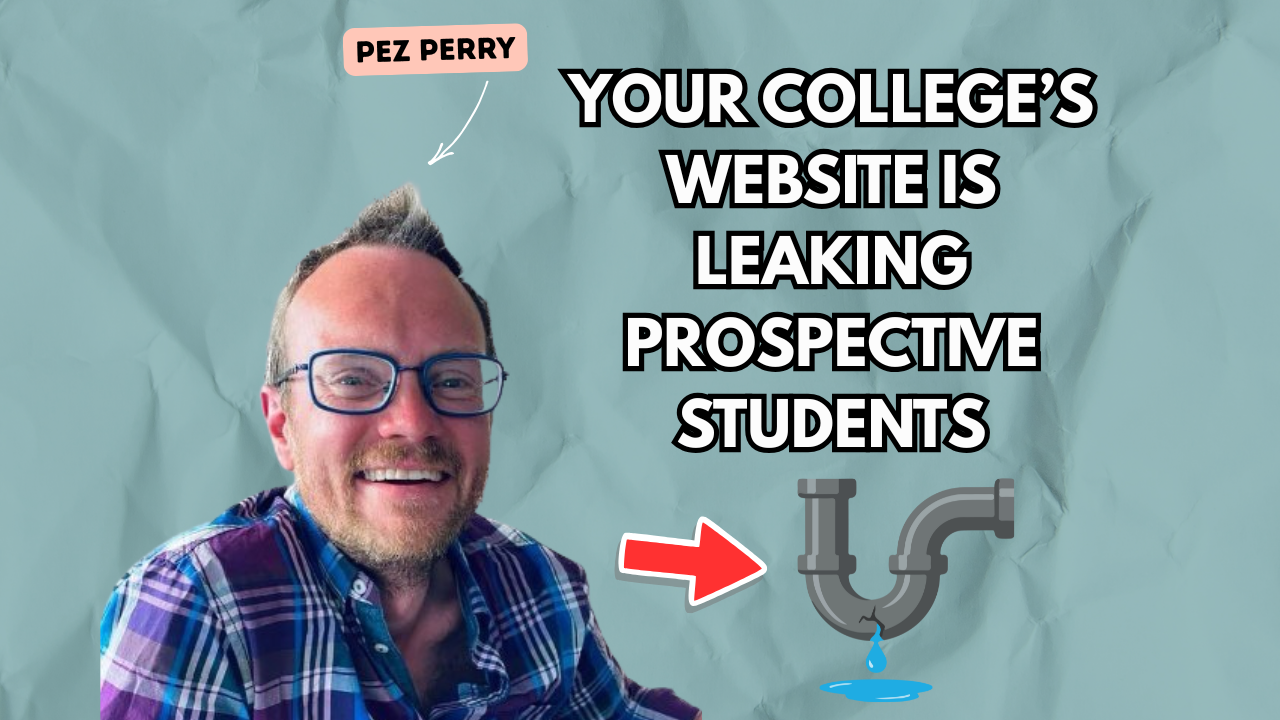
#104 - Why College Websites Are Failing Prospective Students and How to Fix It
My guest today is Pez Perry (Robert Perry), Principal Consultant at Squiz. In this episode, Pez shares his expertise on why most higher education websites fail prospective students and what institutions need to do differently.
Pez discusses the fundamental disconnect between how universities organize their websites (around internal structures and stakeholder priorities) versus how prospective students actually search for information. He explains why the future of university websites looks more like ChatGPT than traditional navigation menus, and offers practical advice for making websites more user-centered.
Key Takeaways:
Most university websites are organized around internal departments and leadership priorities rather than user questions and needs.
Red flags of poor website design include president statements on the homepage, navigation by department names, heavy jargon, and homepage carousels with drone footage.
Prospective students don't understand university terminology like "provost," "dean," "bursar," or "vice chancellor."
The future of university websites is moving toward ChatGPT-style interfaces where users ask questions in natural language and receive immediate answers.
Gen Z students (your future applicants) already expect AI-powered, conversational interfaces in their daily lives.
University of Edinburgh embeds scholarship information directly on course pages, eliminating the need for students to navigate away to find financial aid details.
Monash University gives departments freedom to experiment with content within clear brand guidelines.
Universities are innovation hubs in research but surprisingly conservative in their digital communication strategies.
The quickest win: eliminate jargon, acronyms, and high readability levels from your website content.
Don't assume you know what students want—ask them through surveys, webinar registration questions, and intake forms.
Content should answer user questions first, then deliver brand messaging second.
Connect With Pez:
Resources Mentioned:
University of Edinburgh website: https://www.ed.ac.uk/
Monash University website: https://www.monash.edu/
Squiz: https://www.squiz.net/
Connect With John:
LinkedIn: https://www.linkedin.com/in/johnazoni
Website: https://unveild.tv
Newsletter: https://unveild.tv/newsletter