
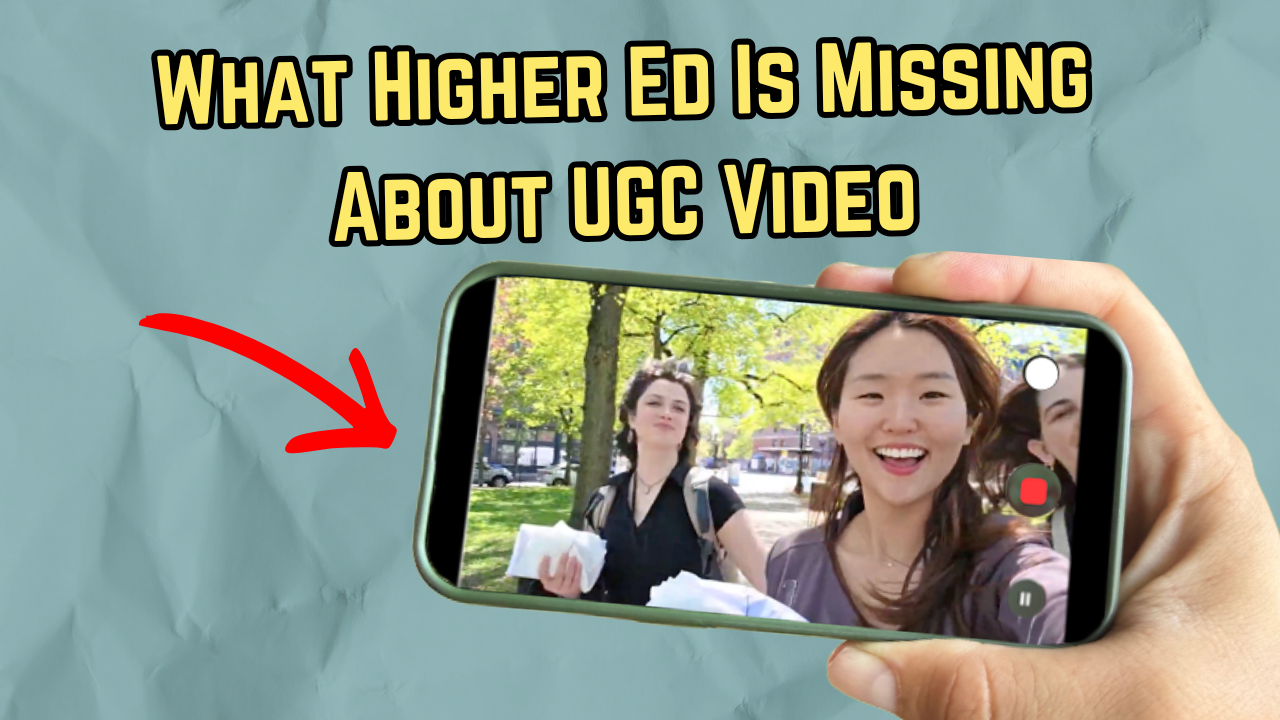
#116 - UGC Video for Higher Ed: The Massive Potential and Untapped Opportunities
In this solo episode, John pulls back the curtain on Unveild's new "Directed UGC" offering — and the surprising gap in the market he hit while trying to promote it. When he went looking for colleges using UGC video well, he found plenty of day-in-the-life content and campus vibes clips, but almost nothing using UGC to tell a real story or market a specific program. That gap became the episode.
John walks through how he landed on a working definition of "real" UGC, why day-in-the-life became the default format schools reach for, and what it looks like when a student or alum is given real direction instead of just a phone and a prompt — using a story from a University of Montana journalism alum as the throughline.
Key takeaways:
Most schools treat UGC and "real" video content as two separate lanes — polished storytelling goes to the video team, and UGC defaults to day-in-the-life. That split is leaving a lot of good content on the table.
John's working definition: real UGC is a student or alum bringing you into their world — how they think, what matters to them, what they've lived through — not just a clip of something happening.
Day-in-the-life dominates because it's easy to operationalize — hand someone a phone, no storytelling skill required. Anything beyond that needs direction and coaching, which is harder to systematize.
Program tours, project walkthroughs, and "a day in my job" videos from alumni are underused UGC formats that could carry the same weight as scripted student-story videos — with more authenticity.
The best moments are often unscripted — John's example: a Montana alum's unplanned detour into how the journalism program's "learn by doing" philosophy played out, including students landing the first photo of Ted Kaczynski during the Unabomber arrest.
Unveild's "Directed UGC" offering pairs a professional storyteller-led interview and shot list with in-house editing, aiming to solve the two biggest UGC pain points: finding willing students and getting usable footage back.
Schools/programs mentioned as reference points for UGC-style content:
The Fletcher School at Tufts University
Kogod School of Business (American University)
University of Michigan
Westminster University
Sewanee: The University of the South
University of Birmingham
University of Leeds
Connect with John:
LinkedIn: https://www.linkedin.com/in/johnazoni
Email: john@unveild.tv
Website: https://unveild.tv
Newsletter: https://unveild.tv/newsletter
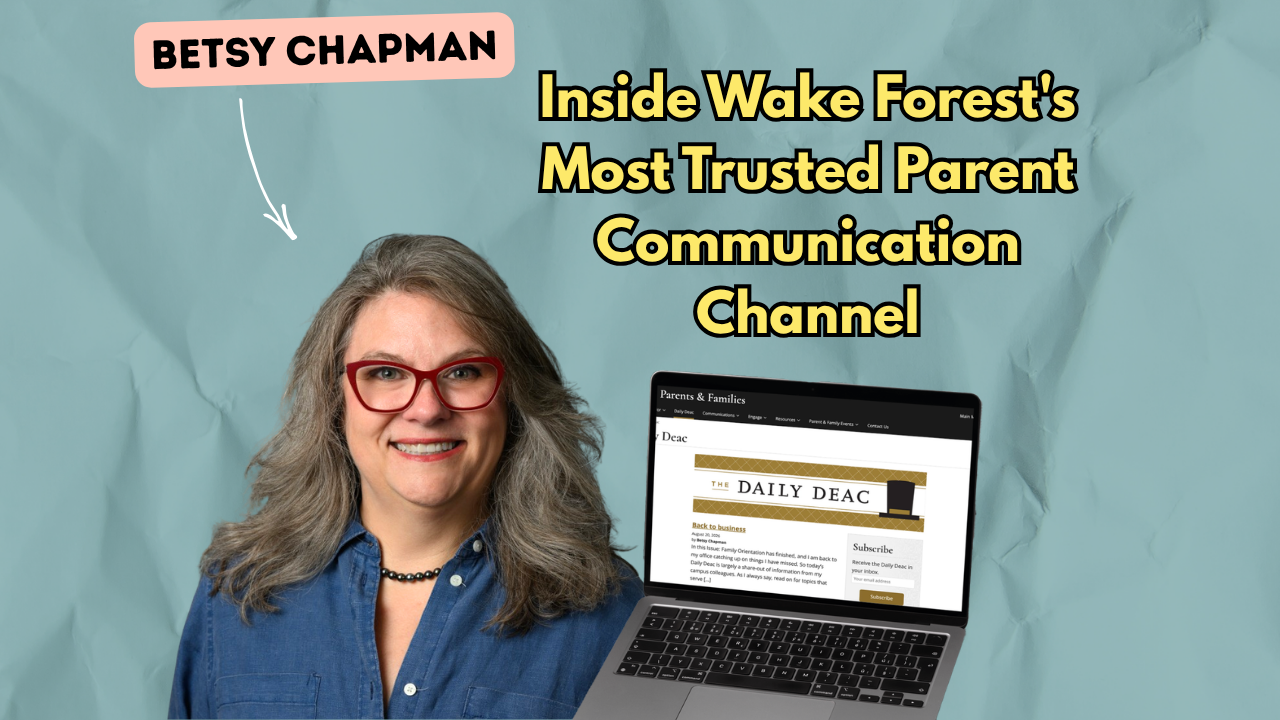
#115 - Inside the Daily Deac Blog: How Wake Forest Built a Trusted Parent Communication Channel
My guest today is Betsy Chapman, Senior Executive Director of Family Communications and Engagement at Wake Forest. Betsy is the voice behind the Daily Deac, a blog for parents and families that's been running nearly every weekday for over a decade and has grown to roughly 8,200 subscribers.
Betsy walks through how the Daily Deac started as an alumni blog called Quad View, how it evolved into the go-to source of information and comfort for Wake Forest parents, and the philosophy behind "Stop, Drop, and Roll" — her framework for helping families support their students without taking over for them. She also shares findings from her own dissertation research linking how deeply families read parent communications to student satisfaction, self-advocacy, and giving behavior.
Key Takeaways:
A named, first-person author builds more trust with readers than an institutional or departmental voice — Betsy's dissertation research on corporate and institutional blogs backed this up directly.
The Daily Deac isn't written from scratch every day — a mix of predictable, cyclical campus content (move-in, midterms, finals) and campus partner requests keeps the workload manageable, often just 15 minutes to an hour a day.
Schools don't need a new hire to start something like this — existing staff in communications, alumni, or student life offices can contribute, or the role can rotate across departments.
"Stop, Drop, and Roll" reframes how families should respond when a student calls with a problem: stop and assess whether the student can handle it, drop your urge to fix it, and roll with whatever solution the student lands on.
Betsy's dissertation found a correlation between how frequently and deeply parents read university communications and three outcomes: higher satisfaction, less direct intervention with university offices, and increased giving to the annual fund.
Some of the most-loved posts weren't polished or strategic — a "five senses" post written during a bout of writer's block, just describing what Betsy observed walking across campus, became one of the most emotionally resonant posts she's written.
Feedback and even pushback from readers (including families who felt a post was condescending) has directly shaped how Betsy frames advice — she treats critical feedback as information, not an attack.
Connect With Betsy:
Email: parents@wfu.edu
Find the blog: search "Daily Deac Wake Forest"
Connect With John:
LinkedIn: https://www.linkedin.com/in/johnazoni
Website: https://unveild.tv
Newsletter: https://unveild.tv/newsletter
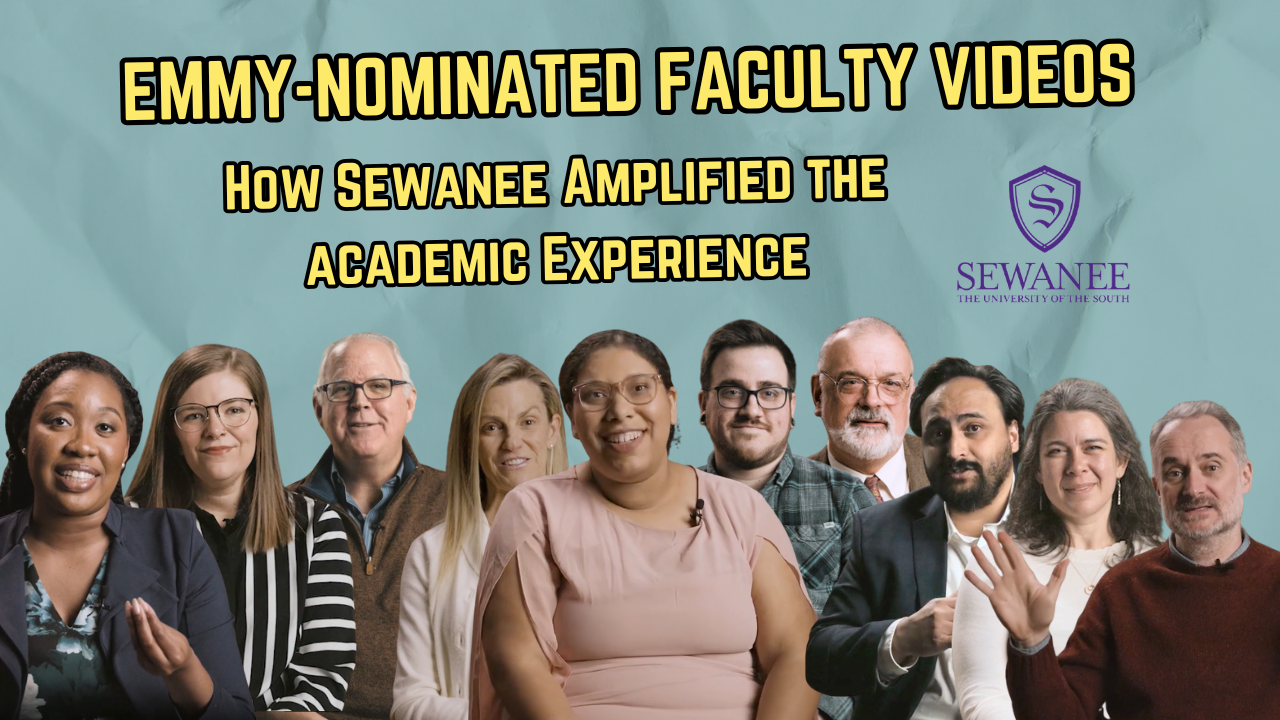
#114 - Emmy-Nominated Faculty Videos: How Sewanee Amplified The Academic Experience
My guest today is Bobby Silk, communication and content strategist in the marketing and communications office at Sewanee: The University of the South. Bobby joined the show to walk through Inquiring Minds, a faculty spotlight video series that went on to earn a regional Emmy nomination — produced on a shoestring, unbudgeted line item of roughly $1,250–$1,500 per video.
Bobby and his small, wear-a-lot-of-hats team (one videographer running two cameras and sound, one editor doing double duty as that same videographer, and an outside animator) pulled off ten faculty videos in three shoot days over winter break, all in a single repurposed campus ballroom basement — accidental purple curtains and all. The conversation covers how they picked faculty, how they framed the ask so it didn't feel like homework, why one location saved the whole budget, and the surprisingly long tail of places these videos have ended up living — from admissions campaigns to a required first-year course.
In this episode:
Why the series went straight-to-camera and personality-forward instead of traditional documentary style, and how that decision got made
How to pitch faculty participation so it doesn't sound like "give us your conference presentation"
The case for one location, one setup, and why that's what actually makes budget video work
How an animator can solve the "we don't have footage of this" problem for historical or abstract topics
Why "views" is the wrong first metric, and what Bobby looks at instead
The unplanned afterlife of this series: newsletters, bio pages, anti-melt campaigns, and a required first-year seminar
Why chasing a $50,000 budget isn't the same as chasing quality — and what Sewanee proved by doing the opposite
Resources mentioned:
Inquiring Minds video series: https://new.sewanee.edu/inquiring-minds/
"How a Diva Made History" (Cecilia Cerja on Josephine Baker): https://new.sewanee.edu/inquiring-minds/how-a-diva-made-history/
"The Mathematics of Aviation" (Catherine Cavagnaro): https://new.sewanee.edu/inquiring-minds/mathematics-aviation/
Rafa documentary (Netflix) — mentioned as Bobby's off-topic "nerding out" pick, no direct link available; searchable on Netflix
Wistia's "One, Ten, One Hundred" Soapbox launch documentary
Leigh Burmesch (Animator): https://leighburmesch.com/
Stephen Garrett (Videographer): https://slgarrett.com/about
Connect with Bobby:
Email: rjsilk@sewanee.edu
Connect with John:
LinkedIn: https://www.linkedin.com/in/johnazoni
Email: john@unveild.tv
Website: https://unveild.tv
Newsletter: https://unveild.tv/newsletter

#113 - The Most Important (and Hardest) Part of Storytelling: Finding the Stories to Begin With
In this solo episode, John tackles a problem he thinks is way more foundational than filming or editing: casting. Before you can tell a great story, you need someone willing to raise their hand and tell it — and John argues that's the part most higher ed teams are actually failing at.
Drawing on conversations with clients and his own experience running Unveild's story-sourcing process, John breaks down why the standard approach — a mass email asking people to "tell your story" — usually falls flat, and walks through what he's currently experimenting with instead: smaller asks, better timing, and specific prompts that help people recognize they actually have something to say.
Key Takeaways:
The hardest part of great storytelling usually isn't the production — it's finding people with real stories who are willing to participate in the first place.
Mass emails asking people to "tell your story" tend to underperform because the ask is too vague, too impersonal, and easy to ignore.
Many students and alumni self-disqualify because they assume their experience isn't dramatic enough — but the most compelling stories often live in small, specific, unpolished moments rather than big "hero" outcomes.
Faculty and staff referrals are valuable, but without training on what makes a story compelling, they tend to surface the same safe, polished profiles over and over.
Lowering the barrier for a first ask — a 30-second voice memo, a one-sentence response — works better than pitching someone straight into a full production, and lets you screen for communication skill and enthusiasm along the way.
Specific prompts ("tell us about a time a professor changed how you think") help people self-identify far more effectively than open-ended asks like "share your story."
Timing matters: asking during emotionally heightened moments — graduation, capstones, final critiques, the end of a clinical rotation — captures better material than following up weeks later.
Story sourcing needs to become an ongoing campus habit rather than a scramble that starts only when a campaign kicks off.
Resources Mentioned:
NPR's The Moth – referenced for its low-friction voicemail-style story submission format
Armchair Expert with Dax Shepard and Monica Padman – specifically the "Armchair Anonymous" segment, cited as an example of how specific prompts generate better story submissions
Glengarry Glen Ross – referenced in passing for the "always be closing" line, which John riffs on as "always be casting"
Connect With John:
LinkedIn: https://www.linkedin.com/in/johnazoni
Email: john@unveild.tv
Website: https://unveild.tv
Newsletter: https://unveild.tv/newsletter
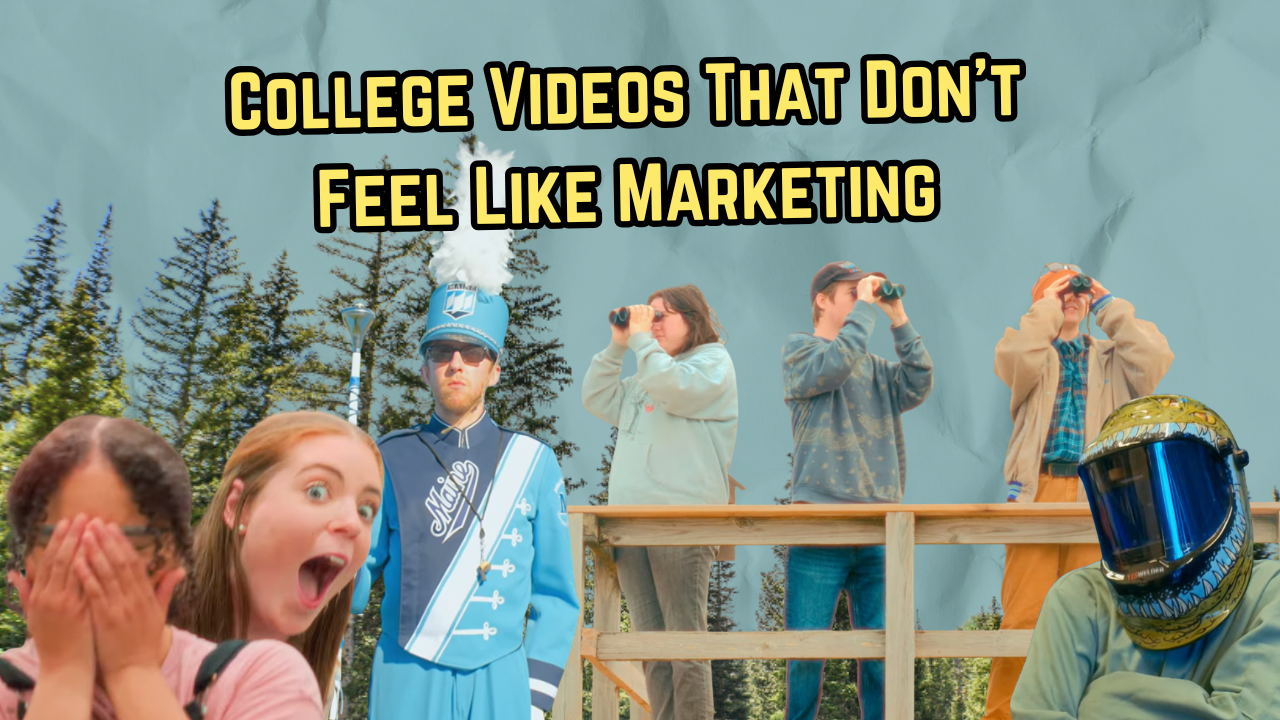
#112 - Program Videos That Don’t Feel Like Marketing - UMaine’s “Life in the Pines” Series
My guests today are Brenn Borror, who leads content strategy at the University of Maine, and Patrick Wine, founder of Story Stroll, the filmmaker behind UMaine's "Life in the Pines" series. We get into how an unscripted, vlog-style student story series came together — and why it's stuck around for three seasons.
Brenn and Patrick walk through how "Life in the Pines" started as a cold-call pitch for a generic campus tour video that they reshaped into something more specific to UMaine, why they insisted on one person, one camera, and no crew for every shoot, and how a rigged-up "snorri cam" — basically a tripod strapped under a student's arms — lets students walk and narrate their own story without feeling guided by the marketing team. We also dig into the unglamorous side of the metrics: why a nearly 40,000-subscriber YouTube channel mostly built on a viral lobster-cooking video and an old extension-office library isn't the same audience watching these student stories, and why that's actually fine.
In this episode:
Why UMaine passed on a polished, teleprompter-style tour video pitch and built something rougher and more specific instead
How the "snorri cam" walk-and-talk format gets genuine, unguided footage out of students
The one-person, one-camera rule and why it matters for getting students to relax on camera
Why calling it "seasons" and "episodes" instead of a playlist changed how people watched it
How a pre-interview process surfaces the small, specific details (like a chocolate bar traded for a bicycle) that make a story worth following
Why low YouTube view counts don't mean the series isn't working, and what they're actually using it for in the funnel
How casting evolved from proactive outreach to an open call, and why they now ask for a 60-second video submission
Why retention, not just recruitment, is a real benefit of this kind of content
Resources mentioned:
Life in the Pines (full series hub): https://umaine.edu/pines/
Life in the Pines, full episode: https://www.youtube.com/watch?v=Ue-xo4MsoTs
Life in the Pines, teaser trailer: https://www.youtube.com/watch?v=m1hKbuFXtw8
Life in the Pines, Season 2 full episode: https://www.youtube.com/watch?v=l2axURGS18I
The University of Maine's YouTube channel: https://www.youtube.com/user/TheUniversityofMaine
Story Stroll Studios (Patrick's production company): storystrollstudios.com
Connect with Brenn:
LinkedIn: https://www.linkedin.com/in/brennborror/
Connect with Patrick:
Story Stroll Studios: storystrollstudios.com
Linkedin: https://www.linkedin.com/in/patrickmwine/
Connect with John:
LinkedIn: https://www.linkedin.com/in/johnazoni
Website: https://unveild.tv
Newsletter: https://unveild.tv/newsletter
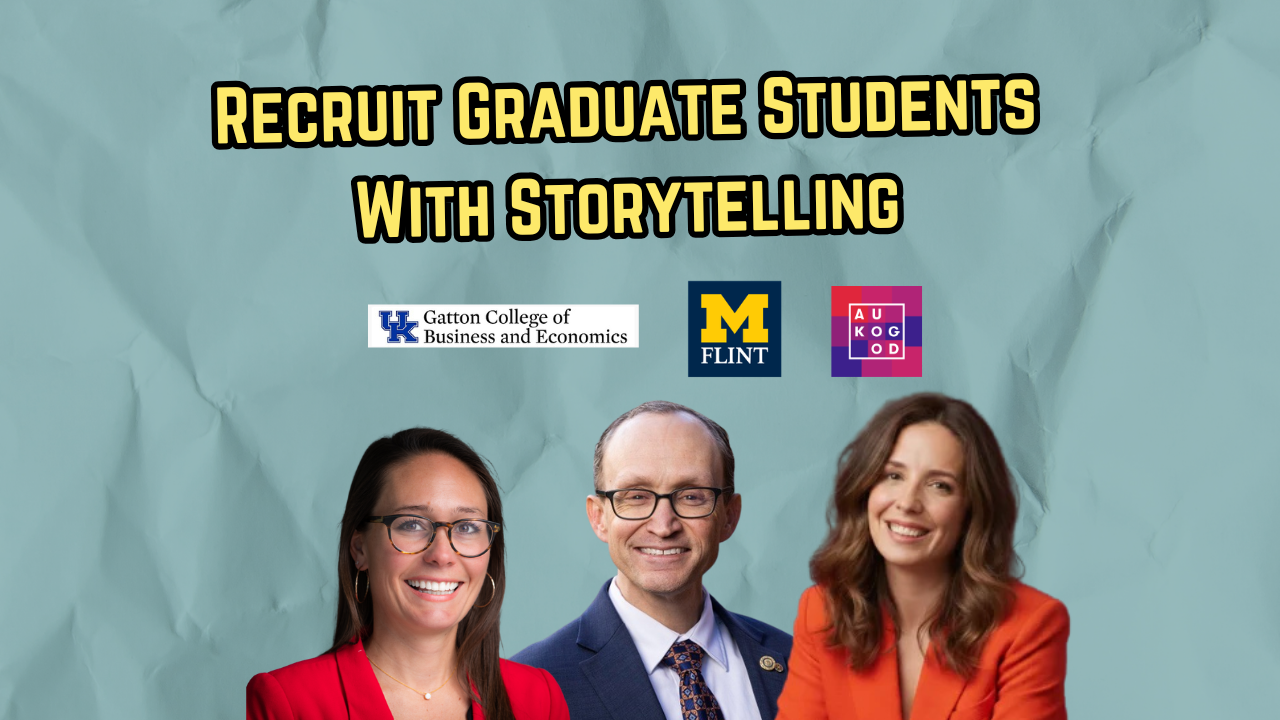
#111 - How To Recruit Graduate Students Using Storytelling
Grad school enrollment is hard right now. International pipelines are drying up, domestic demand is soft in a lot of markets, and prospective students have more options — and more skepticism — than ever. So how do you cut through?
This compilation episode features three marketers from three very different graduate programs who are each doing something smart with storytelling and content creation to ultimately impact enrollment. Katya Popova at American University's Kogod School of Business went all-in on a bold AI identity and turned it into a PR machine. Chris Lewis at University of Michigan Flint built a podcast from scratch — solo — and is using it to meet prospective grad students exactly where they are. And Laura Beth O'Brien at Gatton College of Business and Economics at University of Kentucky figured out that "this degree opens doors" isn't enough — you have to show people how it actually fits into their real, busy, complicated lives.
In this episode:
Why Kogod claiming to be "the first AI-first business school" wasn't just a positioning move — it became their entire enrollment engine
How AI search engines have become their own audience segment, and why earned media is the way to feed them
The podcast strategy that's building a grad enrollment pipeline at UM Flint — and why even a small audience is worth the effort
Why Gatton stopped leading with aspirational alumni outcomes and started leading with "this will actually fit in your life"
How to track storytelling content through the enrollment funnel (including a QR code attribution trick)
The content ecosystem argument: why no single piece of content closes the deal — and what "the whirlpool" actually looks like
Key Takeaways:
Staking a bold, specific institutional claim ("AI-first") gives your PR, content, and enrollment teams something to rally around — and gives media something worth covering.
AI search engines are an audience. Treat them like one. Run monthly reports on what ChatGPT, Gemini, and Perplexity say about your school and adjust accordingly.
Earned media feeds AI findability. Third-party validation (not your own website copy) is what LLMs trust. Put money behind your earned media hits, not just original content.
Podcast transcripts are an underrated SEO and GEO asset — they're long, keyword-rich, and naturally repetitive in a way written content can't be.
A LinkedIn newsletter for your podcast is a low-lift distribution channel that self-selects a genuinely interested audience. A thousand subscribers who opted in beats ten thousand passive email recipients.
Grad school decision cycles are long (18+ months). Your storytelling has to be present at multiple touchpoints — not optimized for the last click.
"This degree will open doors" is table stakes. The story that actually converts is: "You can do this without blowing up your life."
Every story you collect about student or alumni success is also a coaching resource for your own admissions team — Chris Lewis uses podcast episodes to help staff better articulate program value.
Connect with the Guests:
Katya Popova, CMO, Kogod School of Business at American University — LinkedIn
Chris Lewis, Director of Graduate Programs, University of Michigan Flint — LinkedIn | drcleis@umich.edu | Victors in Grad School podcast
Laura Beth O'Brien, Director of Marketing Communications, Gatton College of Business and Economics, University of Kentucky — Linkedin
Resources Mentioned:
Kogod School of Business at American University: https://www.american.edu/kogod/
Victors in Grad School podcast (University of Michigan Flint): (search on your podcast platform)
Gatton College of Business and Economics alumni video series: https://www.youtube.com/@UKGattonCollege
HubSpot Inbound Conference: https://www.hubspot.com/inbound
Poets & Quants (named Kogod "most consequential AI transformation in business education"): https://poetsandquants.com
Axios (featured Kogod student AI research): https://www.axios.com
Connect With John:
LinkedIn: https://www.linkedin.com/in/johnazoni
Website: https://unveild.tv
Newsletter: https://unveild.tv/newsletter
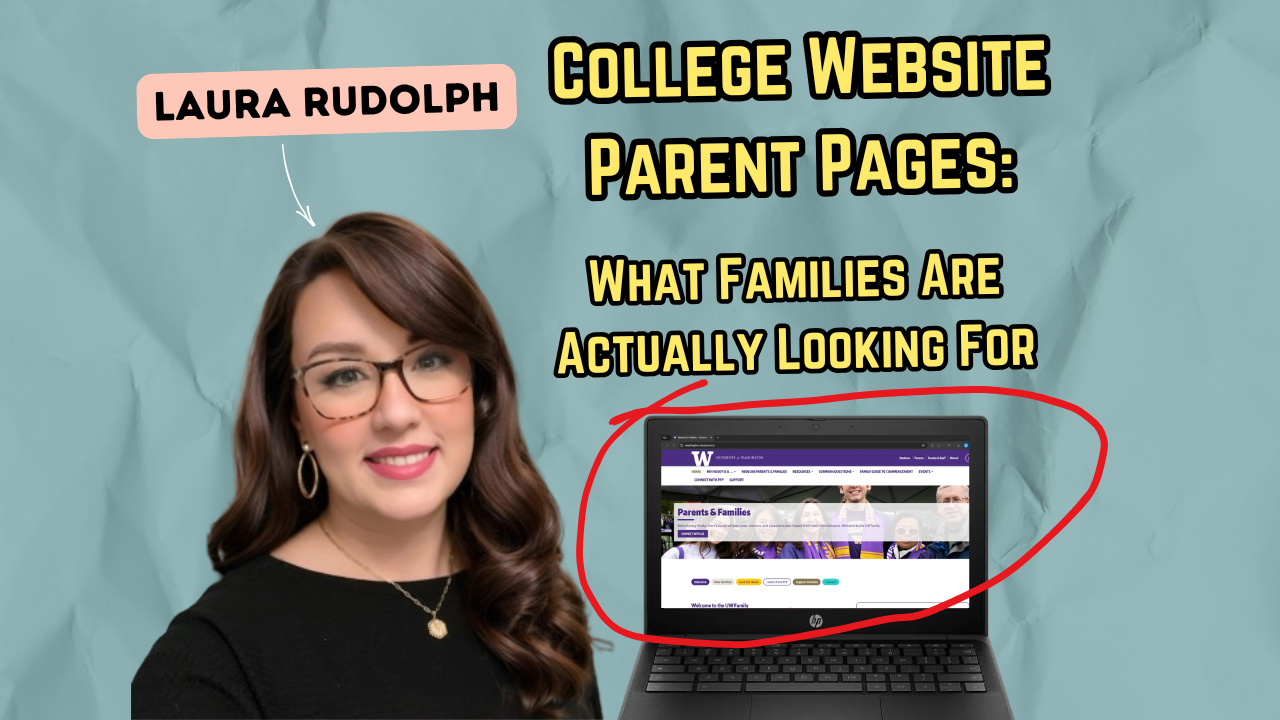
#110 - What College Parents Actually Need From Your Website, and What Higher Ed Is Getting Wrong
Most college parent pages were built by someone who ran out of time and dumped every link they didn't know what to do with into a pile. Laura Rudolph has spent a decade trying to fix that.
Laura is the founder of Square One Consulting, where she helps colleges communicate more clearly and — as she puts it — speak more human. She started her career as a journalist with a crime beat, fell into enrollment marketing, and eventually realized that the audience nobody was talking to — parents — was the one she was most drawn to write for. Turns out, skeptical Gen X parents who want honesty and hate marketing fluff are basically the ideal audience for a former investigative journalist.
In this episode, Laura breaks down why most parent pages fail, what good actually looks like, and the three pieces of content she'd build first if she were starting from scratch. We also walk through real examples from University of Washington, UT Austin, Hamilton, and Wake Forest — and Laura shares a free AI-powered tool she just launched that lets you drop in a URL or paste a parent email and get an honest assessment of whether it's actually working.
In this episode:
Why most parent pages are "informationally present but emotionally absent" — and what that costs you
The filing cabinet problem: why organizing your site around your org chart is failing families who don't know what a bursar does
The three content pieces Laura would build first: a "Start Here" guide, a "What Families Worry About" hub, and a "How to Support Without Taking Over" section
Why telling parents why you want their contact info resulted in a dramatic increase in opt-ins at Laura's former institution
What University of Washington, UT Austin, Hamilton, and Wake Forest are doing right — and what makes each of them a model worth studying
The parent-to-parent trust play most schools are completely ignoring
Why there's a middle ground between helicopter parenting and institutional silence — and how your content can actually help create it
The free tool: Laura's AI-powered Parent & Family Communication Analyst is live at squareoneky.com. Drop in a URL or paste an email and get a scored, tiered review of how well your communication is actually working for a parent audience. It's free.
Good parent page examples mentioned:
University of Washington: https://www.washington.edu/parents/
University of Texas at Austin: https://parents.utexas.edu/
Hamilton College: https://www.hamilton.edu/parents
Wake Forest University: https://parents.wfu.edu/
Providence College (honorable mention for parent blog): https://parents.providence.edu/
Connect with Laura:
Website: squareoneky.com
LinkedIn: linkedin.com/in/laurakrudolph
Connect with John:
LinkedIn: linkedin.com/in/johnazoni
Website: unveild.tv
Newsletter: unveild.tv/newsletter

#109 - "May 1st Is Halftime, Not the Finish Line": A Yield and Melt Survival Guide
If your school just came off a yield season that didn't go the way you hoped — or if you're staring down summer melt and wondering what to actually do about it — this episode is for you.
Rita Winthrop is a marketing consultant with 15 years in higher ed and edtech who helps institutions and brands build content that actually moves people. She runs Rita Winthrop Consulting out of Newport, Rhode Island, specializing in enrollment email campaigns, LinkedIn ghostwriting for higher ed executives, and content strategy that doesn't just fill a calendar. She also has a lot of feelings about yield season — which is exactly why I wanted to get her on the show.
Rita has a rare background: she was both an admissions counselor and the person writing the MarCom for her team at the same time. That dual perspective shapes everything she talks about in this episode — why the disconnect between admissions and MarCom is so damaging, what actually moves students from accepted to enrolled, and why May 1st is halftime, not the finish line.
In this episode:
Why the personalized experience students get with their admissions counselor so often evaporates the moment they deposit — and what a good handoff actually looks like
What bad yield communication strategy looks like in practice: too much volume, too many CTAs, and content that forgets it's talking to a 17-year-old making the biggest financial decision of their life
Why parent communications deserve their own dedicated strategy with its own tone, cadence, and content — and why most schools treat parents as an afterthought
What you can still do right now if you didn't make your class — including how to re-engage fence sitters without looking desperate
Why silence is the biggest driver of summer melt, and what a smart anti-melt campaign looks like from May through August
Transfer students as an underutilized population — why they should be a year-round conversation, not a backup plan
What EdTech vendors consistently get wrong about the people they're selling to (and why cold emailing admissions counselors in April will get you yelled at)
Resources mentioned:
Mailed It! by Day Kibilds and Ashley Budd:https://emailbook.co/
Connect with Rita:
Website: https://ritawinthrop.com
Connect with John:
LinkedIn: https://www.linkedin.com/in/johnazoni
Website: https://unveild.tv
Newsletter: https://unveild.tv/newsletter
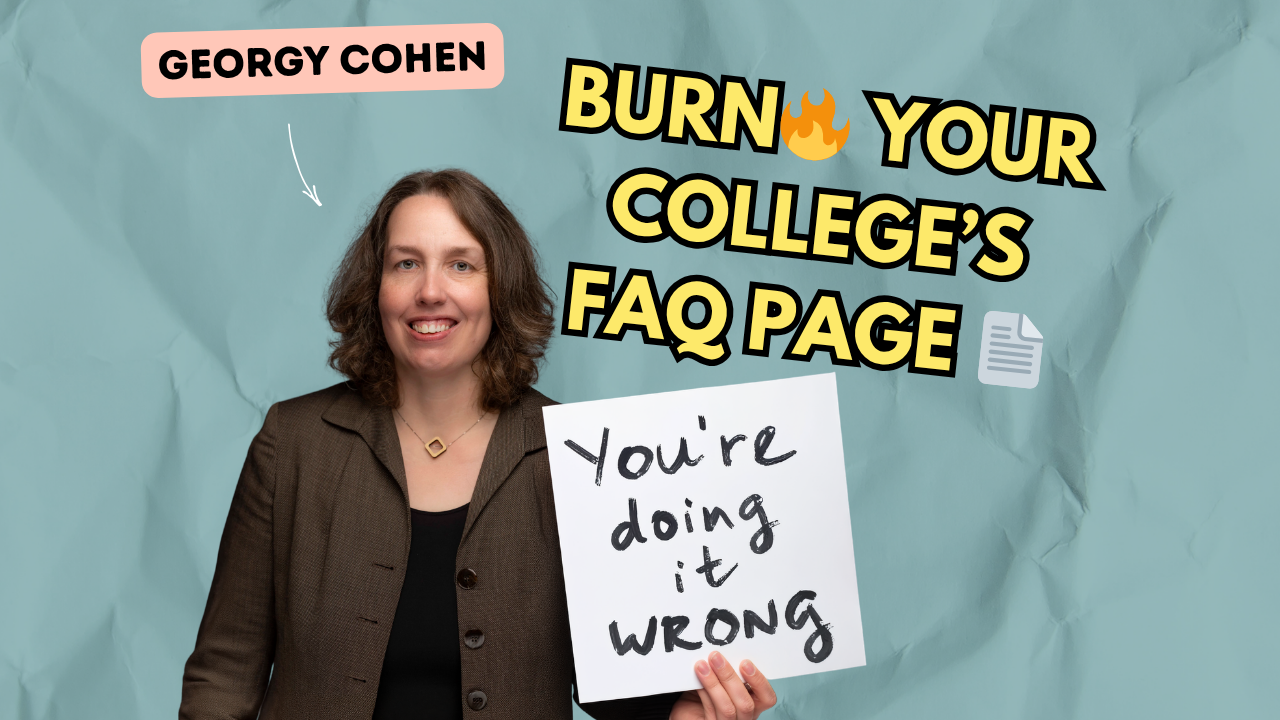
#108 - AI Findability: How to Structure Your College’s Website to Answer Questions (Without The FAQ Dump Page)
If you've been feeling the pressure to overhaul your entire web presence for AI search, this episode is your permission slip to take a breath.
Georgy Cohen is a content strategist who has spent her career in and around higher ed — in-house at universities, at agencies, and as an independent consultant. She joined the show to talk about one of the most practical and overlooked problems in higher ed marketing: how to actually structure your website so it answers the questions prospective students are asking — without relying on the sprawling, ungovernable FAQ page that becomes a dumping ground the moment you create it.
Georgy brings a content strategy and information architecture lens to a conversation that usually stays at the surface level of SEO and branding. The result is a genuinely useful framework for thinking about your web content on two levels at once — what the human sees and what the bots are crawling — and why attending to both doesn't have to mean starting from scratch.
In this episode:
Why FAQ pages are well-intentioned but create more problems than they solve — and what to do instead
The difference between the "viewable web" and the "semantic web," and why higher ed is mostly only thinking about one of them
Why clear communication fundamentals will get you most of the way to AI findability — and why panicking won't
How to bridge the gap between subject matter experts (faculty, financial aid staff) and the content strategists who know how to structure information
Why higher ed's reluctance to have a point of view is hurting both their brand and their findability
The role user research should be playing — and why it's underused
Two short books Georgy recommends for anyone who wants to build a foundational understanding of content strategy and information architecture
Resources mentioned:
Everyday Information Architecture by Lisa Maria Marquis:
The Elements of Content Strategy by Erin Kissane
About Schema Markup:
Connect with Georgy:
LinkedIn: Georgy Cohen: https://www.linkedin.com/in/georgy/
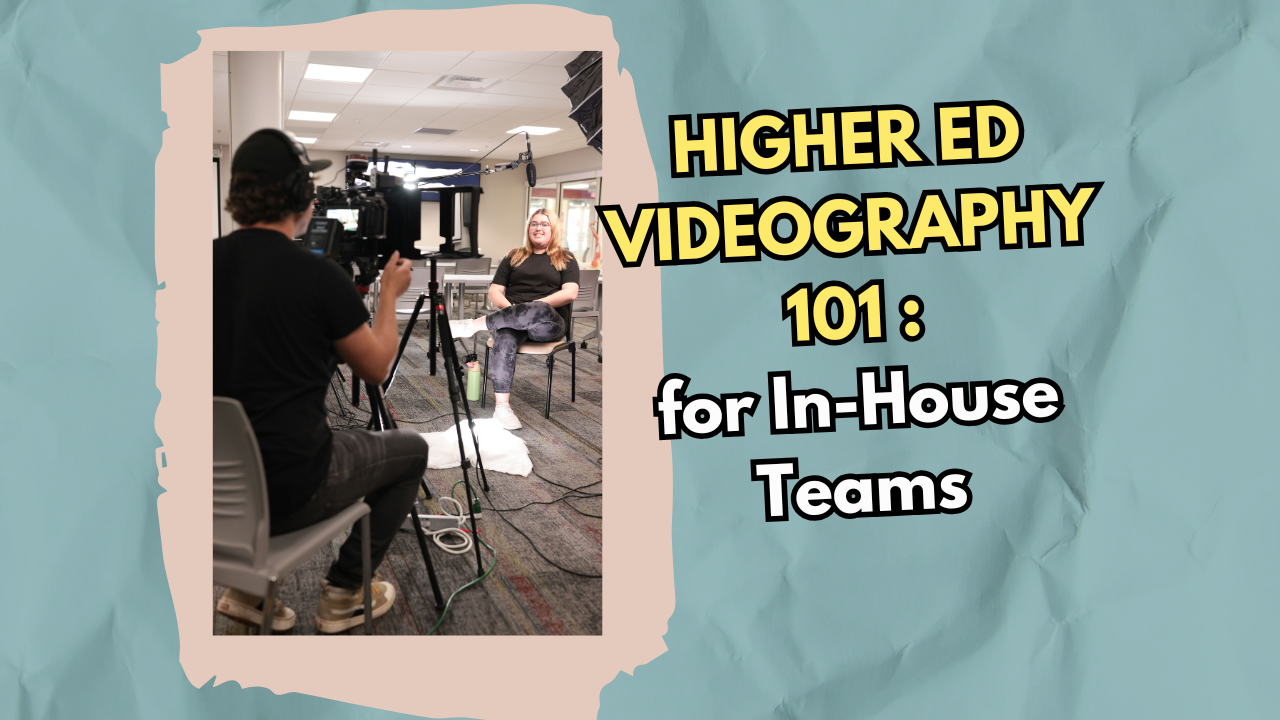
#107 - Higher Ed Videography 101 for In-House Teams: A Crash Course in Elevating Your Videos
In this solo episode, John breaks down the fundamental camera settings and workflow decisions that can immediately elevate your video quality—whether you're brand new to video or looking to refine your technical foundation as an in-house higher ed videographer.
Key takeaways:
The four critical camera settings: frame rate (shoot 24fps for cinematic look), aperture (lowest f-stop for background blur), shutter speed (set to 2x your frame rate), and ISO (keep as low as possible to avoid grain)
Why shooting in 4K but editing in 1080p gives you flexibility without unnecessary file sizes
The case for auto white balance in run-and-gun scenarios to avoid color correction nightmares
Why shooting in LOG color profiles often creates more problems than it solves for in-house teams
How to avoid the two biggest stabilization mistakes: micro-jitter from handheld shooting and overusing gimbal shots
Audio quality matters more than video quality—record directly into your camera and hide those lav mics
Think about workflow and asset management, not just the single video you're making right now
Connect with John:
Email: john@unveild.tv
LinkedIn: https://www.linkedin.com/in/johnazoni
Website: https://unveild.tv
Newsletter: https://unveild.tv/newsletter

#106 - CRUSH Yield Season With a Simple Google Doc
In this solo episode, John addresses a critical gap in how colleges use video content during yield season. Most institutions have great video content scattered across platforms, but admissions counselors often don't have easy access to share it in one-on-one conversations with prospective students—exactly when it could make the biggest impact.
Key takeaways:
Video shouldn't just be a broadcast tool measured by views—it's a powerful one-to-one communication asset
Five strategic views from an admissions counselor to fence-sitting students may be more valuable than 5,000 algorithm-driven views
Marketing, social media, and admissions teams often operate in silos, missing opportunities to leverage existing content
A simple Google Doc library organized by student questions can bridge this gap in an afternoon
Don't just rely on the algorithm to deliver your content—be the algorithm by hand-delivering the right video at the right moment
Measure success not just through broadcast metrics, but through counselor feedback on whether videos helped close enrollment gaps
Resources mentioned:
Free Google Doc template: https://unveild.tv/strategytoolbox
Connect with John:
LinkedIn: https://www.linkedin.com/in/johnazoni
Email: john@unveild.tv
Website: https://unveild.tv
Newsletter: https://unveild.tv/newsletter
#105 - How Pratt Institute is Helping Change the Narrative on Creative Education
My guest today is Jolene Travis, Assistant Vice President for Communications and Marketing at Pratt Institute. In this episode, Jolene shares how Pratt built a comprehensive campaign to combat negative headlines about creative arts education and shift public perception.
Jolene discusses the "Power of a Creative Education" framework that emerged from a single question from her president: "What are we going to do about these headlines?" She walks through the internal process of building messaging that all stakeholders could see themselves in, the importance of listening to faculty pushback, and how strategic media relations generated nine top-tier placements including The New York Times, NBC Nightly News, and WNYC—all amplifying a counter-narrative that painting and drawing programs have waiting lists while critics claim art school is dead.
Key Takeaways:
GEO (Generative Engine Optimization) is critical for higher ed—95% of AI citations come from earned media, not your website.
A creative education teaches critical questioning and problem-solving, not just technical skills—it prepares graduates to pivot across industries.
Internal alignment on messaging is non-negotiable—if faculty and staff don't see themselves in your framework, it won't work externally.
Success in creative fields isn't always a Google salary—art residencies, grants, and having a "bar gig that supports your creative work" are valid markers of success.
The most compelling messages often come from proximity to leadership—Jolene captured "there's a waiting list for painting and drawing" from staffing her president at an event.
A single data point (applications up in fine arts) became the foundation for 9 major media placements when paired with proper media prep and relationship building.
Partner with peer institutions rather than compete—a chorus is stronger than a single voice when shifting narratives.
NBC produced a full campus segment without ever visiting campus because Pratt had organized B-roll in their digital asset management system.
Zoom waiting room videos are an overlooked touchpoint—Pratt's 30-second video plays in 60,000 meetings annually, creating brand impressions before conversations even start.
Start your campaign by listening, not by pushing out your message—understand what the other side is saying first.
Holiday breaks are ideal times to think through big strategic challenges.
Connect With Jolene:
Resources Mentioned:
Pratt Institute website
Bynder (Digital Asset Management system)
Muck Rack GEO report
The New York Times: "Pratt School of Art applications up" coverage
WNYC/Gothamist: Trend piece on NYC art school applications
NBC Nightly News segment on AI and creativity
Blog post on Zoom waiting room videos: https://unveild.tv/blog
Connect With John:
LinkedIn: https://www.linkedin.com/in/johnazoni
Website: https://unveild.tv
Newsletter: https://unveild.tv/newsletter
#104 - Why College Websites Are Failing Prospective Students and How to Fix It
My guest today is Pez Perry (Robert Perry), Principal Consultant at Squiz. In this episode, Pez shares his expertise on why most higher education websites fail prospective students and what institutions need to do differently.
Pez discusses the fundamental disconnect between how universities organize their websites (around internal structures and stakeholder priorities) versus how prospective students actually search for information. He explains why the future of university websites looks more like ChatGPT than traditional navigation menus, and offers practical advice for making websites more user-centered.
Key Takeaways:
Most university websites are organized around internal departments and leadership priorities rather than user questions and needs.
Red flags of poor website design include president statements on the homepage, navigation by department names, heavy jargon, and homepage carousels with drone footage.
Prospective students don't understand university terminology like "provost," "dean," "bursar," or "vice chancellor."
The future of university websites is moving toward ChatGPT-style interfaces where users ask questions in natural language and receive immediate answers.
Gen Z students (your future applicants) already expect AI-powered, conversational interfaces in their daily lives.
University of Edinburgh embeds scholarship information directly on course pages, eliminating the need for students to navigate away to find financial aid details.
Monash University gives departments freedom to experiment with content within clear brand guidelines.
Universities are innovation hubs in research but surprisingly conservative in their digital communication strategies.
The quickest win: eliminate jargon, acronyms, and high readability levels from your website content.
Don't assume you know what students want—ask them through surveys, webinar registration questions, and intake forms.
Content should answer user questions first, then deliver brand messaging second.
Connect With Pez:
Resources Mentioned:
University of Edinburgh website: https://www.ed.ac.uk/
Monash University website: https://www.monash.edu/
Squiz: https://www.squiz.net/
Connect With John:
LinkedIn: https://www.linkedin.com/in/johnazoni
Website: https://unveild.tv
Newsletter: https://unveild.tv/newsletter
#103 - Reversing a 40% Enrollment Drop at Montana University
In this episode, Jenny Petty and Stephanie Geyer talk about their experiences in higher education marketing, focusing on their collaborative efforts at the University of Montana. They discuss the challenges of enrollment decline, the importance of storytelling, and the revitalization of campus traditions. The conversation also touches on the significance of indigenous representation and the future of marketing strategies in higher education.
Takeaways
The importance of mentorship in career development.
Building a modern marketing team requires collaboration and innovation.
Revitalizing campus traditions can enhance community engagement.
Storytelling is a powerful tool in higher education marketing.
Indigenous representation is crucial for fostering belonging.
Enrollment strategies must adapt to changing demographics.
Creating a brand identity requires input from the entire campus community.
Digital marketing strategies are essential for modern enrollment efforts.
Emphasizing retention is as important as recruitment.
Continuous learning and adaptation are key in higher education marketing.
Links:
Jenny’s Linkedin: https://www.linkedin.com/in/jennydurnanpetty/
Stephanie’s Linkedin: https://www.linkedin.com/in/stephanie-geyer-553a862/
Subscribe to the Higher Ed Storytellers Digest. A weekly newsletter for higher ed MarCom leaders: unveild.tv/newsletter
#102 - The Tiny Team Behind Felician University’s Viral Short-Form Video Hits
In this conversation, Christine Albano discusses her journey in social media management within higher education, particularly at Felician University. She shares insights on the importance of social media as a research tool for prospective students, the creative processes behind successful campaigns, and the challenges of managing a student content team. Christine emphasizes the need for authenticity in content creation and the role of AI as a supportive tool in marketing strategies. The discussion also covers engagement strategies, including giveaways and contests, and the future direction of Felician's content strategy, including a new podcast initiative.
Key Takeaways:
Social media is how prospective students research colleges: Platforms like Instagram and TikTok function as search engines, giving students a real look at campus life before they ever visit a website.
Strong engagement comes from relevance and creativity: Content performs best when it highlights real experiences, hands-on learning, and student voices rather than polished marketing clichés.
Student content teams need structure, trust, and training: Clear guardrails, hands-on coaching, and shared creative processes help students contribute effectively while staying on brand.
Giveaways and interactive formats can drive real momentum: Well-designed campaigns (like Felician’s anti-melt giveaway) can sustain interest, boost engagement, and support enrollment goals.
Authenticity and smart use of AI strengthen content strategy: Honest storytelling resonates most, while AI works best as a supportive tool for ideation, captions, and efficiency—not a replacement for human creativity.
Relevant links:
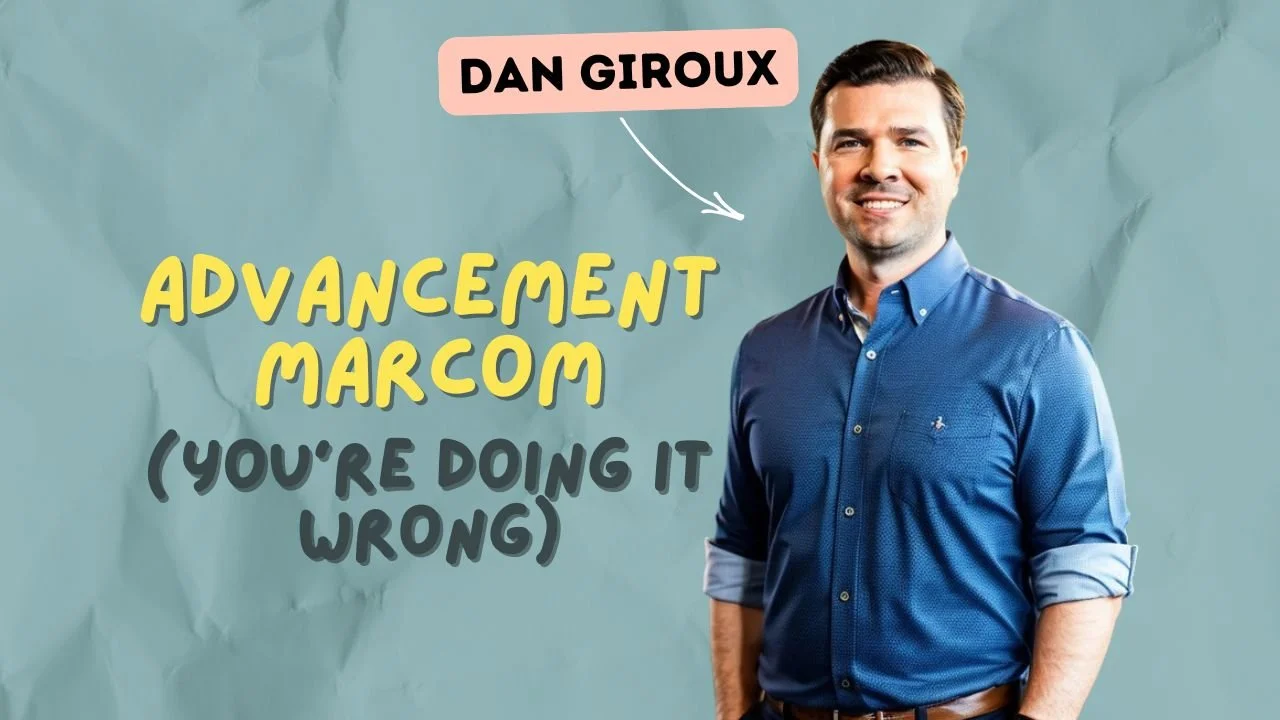
#101 - Why Advancement MarCom Is Still the Underdog (And Why That Needs to Change)
In this episode, host John Azoni sits down with Dan Giroux, independent consultant and former senior advancement communications leader at Drexel University, to explore why Advancement Marketing & Communications (MarCom) is one of the most overlooked — yet most critical — functions in higher education today.
Dan shares insights from his three-act career journey (agency, in-house, and independent consulting), discusses the structural challenges holding advancement teams back, and outlines practical, realistic ways institutions can create more authentic, impactful content — even with limited resources. The conversation dives deep into storytelling, leadership alignment, donor engagement, and why higher ed can learn a lot from modern creators like MrBeast when it comes to community-driven philanthropy.
This episode is a must-listen for advancement leaders, MarCom professionals, and anyone navigating fundraising, alumni engagement, or institutional storytelling in a rapidly changing higher-ed landscape.
Key takeaways:
Advancement MarCom plays a bigger role than many institutions realize: When it’s treated as tactical support instead of a strategic function, schools miss opportunities to drive engagement, loyalty, and giving.
Collaboration starts with leadership alignment: Strong partnerships between Central MarCom and Advancement leaders make cross-team collaboration possible; misalignment at the top creates silos everywhere else.
Authentic storytelling comes from specificity, not polish: Donors and alumni connect more deeply with real, detailed stories than with highly produced, generic campaign messaging.
Stewardship is a growth strategy, not an afterthought: Post-gift communication and impact storytelling strengthen relationships and increase long-term support.
Limited resources don’t have to limit impact: Small teams can scale by prioritizing the right work, using freelancers strategically, and building repeatable content systems.
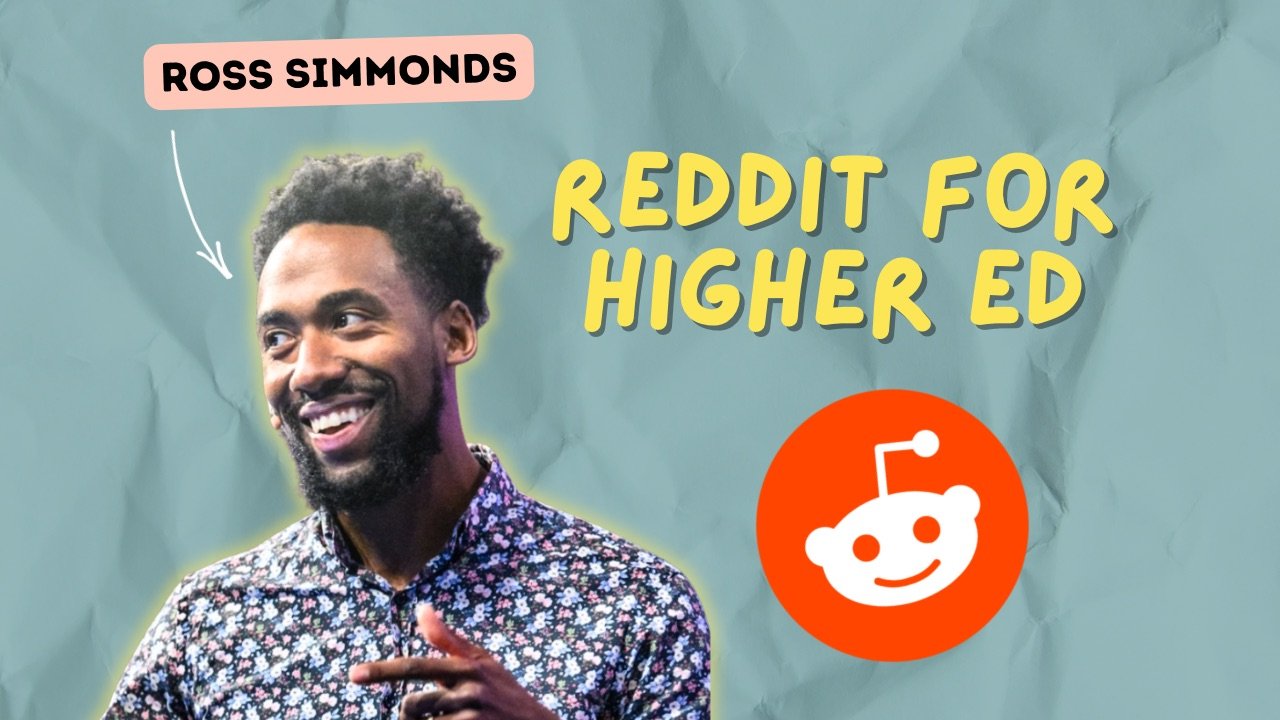
#100 - Reddit for Higher Ed 101: Why Every College Needs a Subreddit (AI Search, SEO, and Enrollment Strategy)
In this episode, Ross Simmonds, CEO of Foundation Marketing and Distribution.ai, unpacks why Reddit has become one of the most influential platforms in the student decision-making process—shaping search rankings, AI responses, and campus reputation in ways most institutions aren’t tracking. He explains how universities can strategically participate without sounding promotional, how to build karma and credibility, and why owning your subreddit is now essential brand hygiene. Ross shares practical steps for teams of any size to start distributing content effectively, encourages leveraging student-generated stories, and highlights how repurposing existing assets can drive massive impact. He also discusses his book, Create Once, Distribute Forever, and offers low-lift strategies to help higher ed marketers turn Reddit from a risk into an unmatched opportunity.
Links:
Ross’ book: Create Once, Distribute ForeverRoss’ companies: Foundation Marketing and Distribution.ai
Key takeaways:
Reddit now shapes both search results and AI-generated answers used in the college search.
Universities must own and actively manage their subreddits to influence student perception.
Zero-click storytelling outperforms link-dropping and builds trust on Reddit.
Studying subreddit culture and tailoring content to it prevents bans and boosts engagement.
Consistency—15 minutes a day of authentic activity—compounds into real visibility and impact.
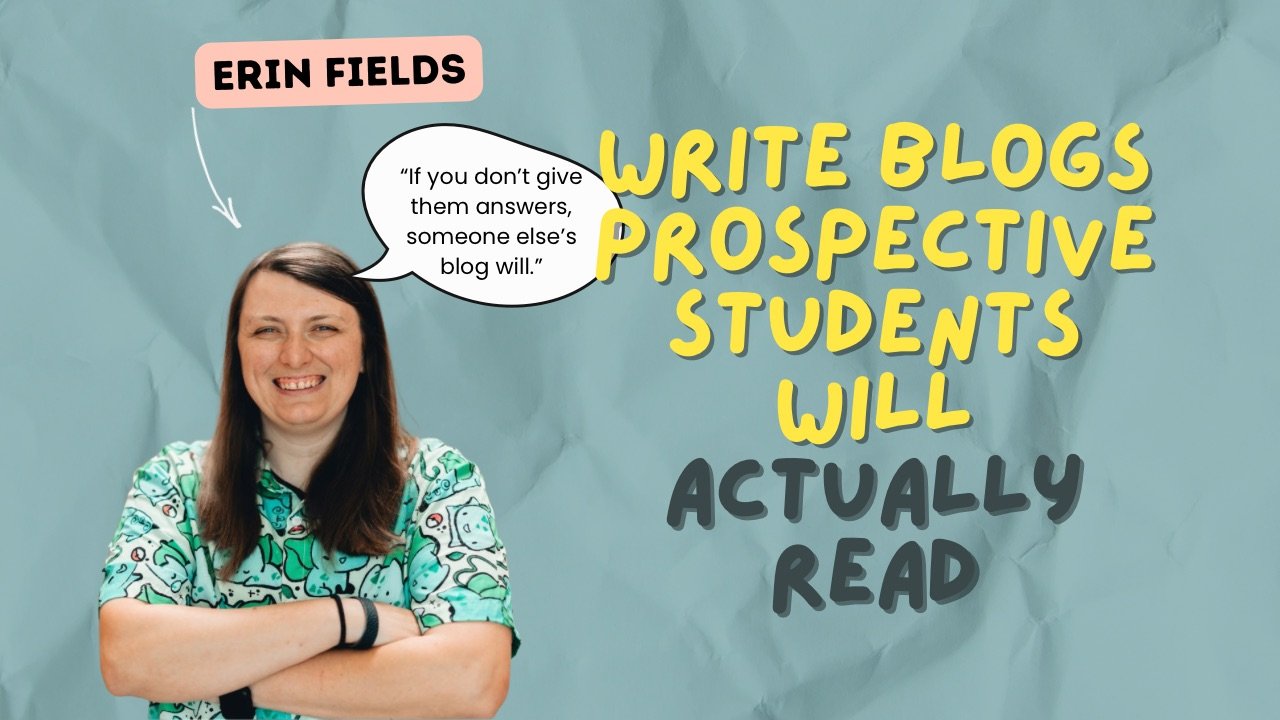
#99 - How to Write Blogs and Emails Prospective Students Might Actually Read
In this conversation, Erin Fields, the marketing director at Ology, discusses her journey in higher education marketing, emphasizing the importance of authentic content and understanding student needs. She shares insights on leveraging LinkedIn for thought leadership, the role of Reddit in gathering student feedback, and effective strategies for email marketing and blog content. Erin highlights the significance of spotlighting real student stories to build trust and relatability, and encourages higher ed professionals to embrace experimentation in their content creation efforts.
Key takeaways:
Authentic, human-sounding conversations should lead higher ed marketing.
Student needs and real questions must drive all content decisions.
Platforms like LinkedIn and Reddit are essential for understanding student sentiment.
Content should prioritize clarity, simplicity, and genuine value.
Building helpful, student-centered resources strengthens brand trust over time.

#98 - How Higher Ed Can Steal Apple’s Playbook for Vision, Buy-In, and Brand Momentum
In this engaging conversation, Dr. Dérecco Lynch shares his insights on transforming higher education through innovative marketing strategies, storytelling, and building brand affinity. He emphasizes the importance of engaging students and stakeholders by simplifying messaging and creating a culture of collaboration. Drawing parallels with Apple's approach to product launches, Dr. Lynch discusses the need for higher education institutions to adapt to market changes and actively engage with their communities. He also highlights the significance of celebrating wins to foster a positive organizational culture and motivate staff.
Student stories landing page referenced in episode: https://www.uc.edu/news/articles/2023/11/beyond-the-classroom-with-5-real-uc-students-around-the-country.html
DéRecco's Linkedin post about the Apple Keynote: https://shorturl.at/AyYrY
Story-driven messaging helps higher-ed institutions communicate real impact.
Simple, clear pillars make institutional visions easier to align around.
Activations and experiences are more effective than emails or PDFs for spreading vision.
Building brand affinity early leads to stronger long-term loyalty and advocacy.
Higher ed must innovate and adapt to stay competitive in a shifting market.

#97 - Reducing Friction in Your Email Nurture Campaigns to Prospective Students
In this episode, John Azoni interviews Cory Glover, a Marketing Cloud Manager at the University of Michigan Dearborn, about reducing friction in email campaigns. They discuss the importance of personalization, the challenges of managing email communications, and the impact of strategic changes in messaging. Cory shares insights on improving student engagement through dynamic content and storytelling, emphasizing the need for clear, actionable communication. The conversation also touches on the role of technology in enhancing the student experience and the significance of creating a seamless journey for prospective students. They also review slides from a presentation that demonstrate the effectiveness of visual changes, such as adding icons, in improving email readability.
To view the presentation slides referenced in this episode click here.
Takeaways:
Personalization in email campaigns can significantly enhance student engagement.
Dynamic content and storytelling are effective in reducing friction in communication.
Clear, actionable communication is crucial for improving student experience.
Strategic changes in messaging can lead to increased application and deposit rates.
Technology plays a vital role in enhancing the student journey.